How to Light a Pool Area Without Creating Glare
Pool lighting needs to make steps, deck edges, seating areas, walkways, and landscaping visible without creating uncomfortable brightness. Water makes this more difficult because it reflects light, turning poorly positioned fixtures into distracting glare across the pool and deck.
Effective pool-area lighting focuses on controlling light rather than simply increasing brightness. Fixture placement, beam angle, shielding, color temperature, and sightlines help provide comfortable visibility without exposed LEDs or harsh reflections.
Jacksonville properties also face humidity, rain, irrigation, coastal conditions, and dense landscaping. Aloha Outdoor Lighting designs and installs low-voltage lighting for pools, patios, walkways, and surrounding landscapes, with careful attention to glare control and nighttime comfort.
Why Pool Areas Are Especially Prone to Glare
Glare happens when a light source or reflection appears much brighter than its surroundings. This becomes more noticeable at night, when an exposed LED can feel harsh against an otherwise dark outdoor setting.
Pool water adds to the problem by reflecting light differently depending on viewing angle, surface movement, underwater lighting, and fixture placement. A fixture hidden from direct view can still create a bright reflection for someone sitting across the pool.
Light-colored concrete, pavers, tile, coping, and walls can also reflect more light toward the eyes. Effective glare control keeps these reflections comfortable without removing the attractive shimmer and visual depth that lighting can create on the water.
Start With Sightlines Before Deciding Where Fixtures Go
One of the most useful steps in pool lighting design happens before fixture selection. Identify where people will actually spend time and what they will see from those positions. Important viewpoints often include outdoor dining tables, lounge chairs, covered patios, outdoor kitchens, spa seating, sliding doors, windows facing the pool, and pathways approaching the deck.
A fixture can be technically well positioned and still be uncomfortable if its LED or lamp is visible from one of these locations. Aiming should be checked from seated eye level as well as standing eye level. Someone sitting beside the pool has a lower line of sight and may see directly into a fixture that appears concealed to a person standing nearby.
Views from inside the home matter too. Large windows and glass doors often frame the pool as part of the nighttime landscape. Bright fixtures aimed toward the house can create glare on the glass and make it harder to appreciate the outdoor view.
Designing around sightlines changes fixture placement considerably. Each light needs a position where it can perform its job without placing the brightest part of the source directly within common lines of sight.
Control Beam Direction and Keep Light Away From People's Eyes
Directional control is one of the strongest tools for reducing poolside glare. Landscape spotlights and accent fixtures should generally be positioned so their strongest output travels toward the intended surface and away from primary viewing areas.
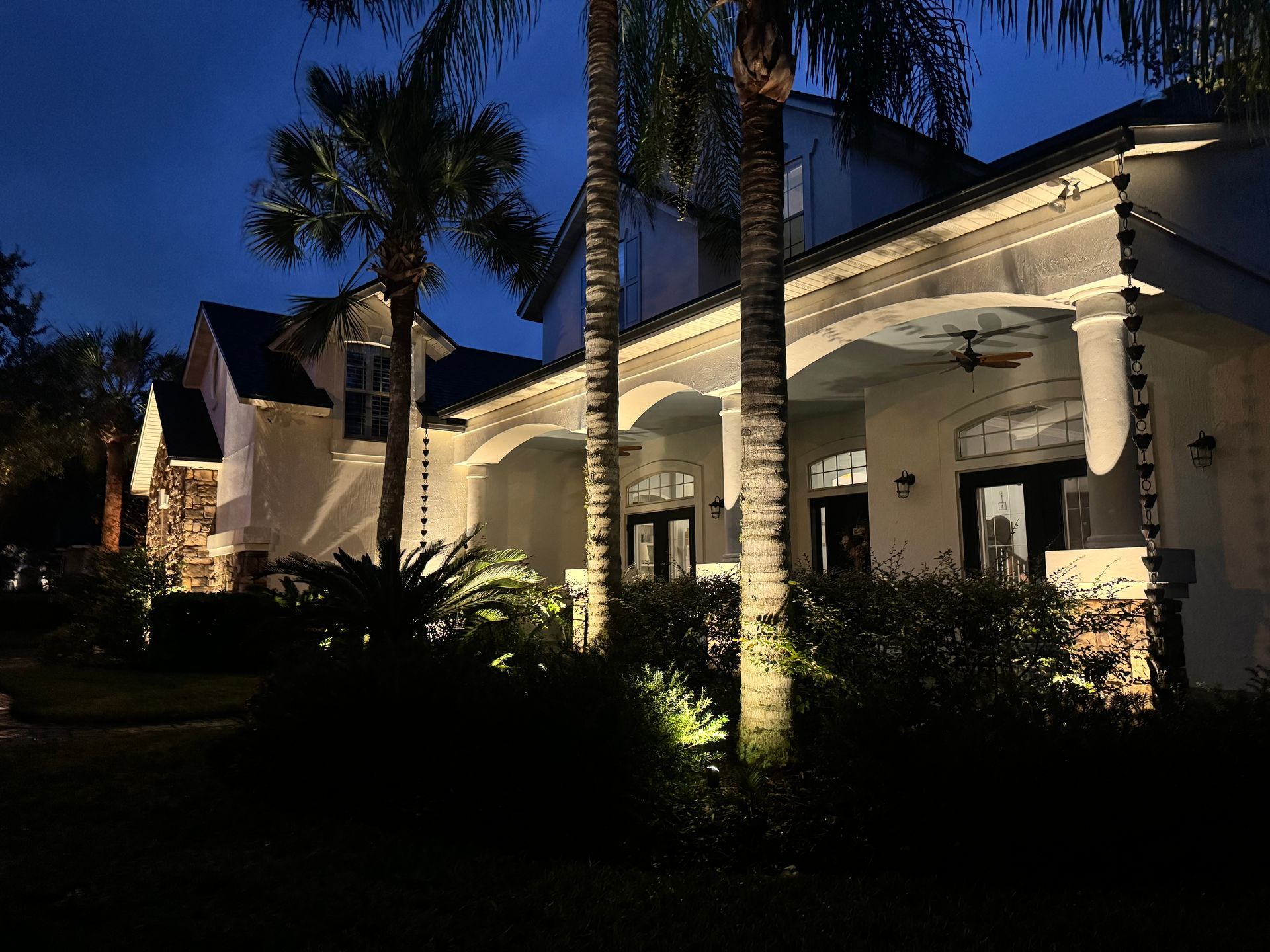
Consider a palm or ornamental tree beside a pool. Placing an uplight on the side facing the seating area may expose the fixture to anyone looking across the deck. Moving it around the trunk can preserve the illuminated canopy while allowing the tree itself to conceal much of the source.
Beam spread matters just as much as fixture position. A beam that is wider than necessary may illuminate the intended tree while also spilling across a deck, window, or seating area. Narrower optics can offer better control on tall or slender targets. Wider distributions are useful for larger surfaces, but they need careful aiming.
Precise aiming usually produces a better result than increasing fixture output. A moderate-output light with controlled optics can make a feature stand out without introducing the bright hotspots associated with an oversized or poorly aimed fixture.
Use Shielding to Hide Bright LED Sources
Fixtures near pools benefit greatly from physical glare control. Deeply recessed light sources, glare shields, louvers, hoods, and carefully designed optics prevent people from seeing the brightest part of the fixture from normal viewing positions.
The depth of the LED inside the fixture matters. A light source positioned close to the opening can remain visible from several angles, even with a small shield. A deeply recessed source gives the fixture housing more opportunity to block direct views of the LED.
Shield length also affects performance. A properly designed shield can allow an uplight to illuminate a tree canopy or architectural surface without presenting a bright point of light at deck level. This is especially useful around pools because people frequently look horizontally across the property.
Physical shielding should be part of the fixture design rather than an improvised addition. Makeshift covers can interfere with drainage, heat management, beam quality, and fixture performance.
Avoid Overlighting the Pool Deck
More illumination does not automatically improve nighttime visibility. Excessive brightness can make vision less comfortable by creating extreme differences between brightly illuminated surfaces and darker surroundings.
Pool decks usually benefit from controlled layers of moderate light. Paths, elevation changes, steps, deck boundaries, and activity areas need to be readable, but every square foot does not need equal illumination. A pool deck that is excessively bright can flatten the visual character of the landscape and make adjacent areas appear unusually dark.
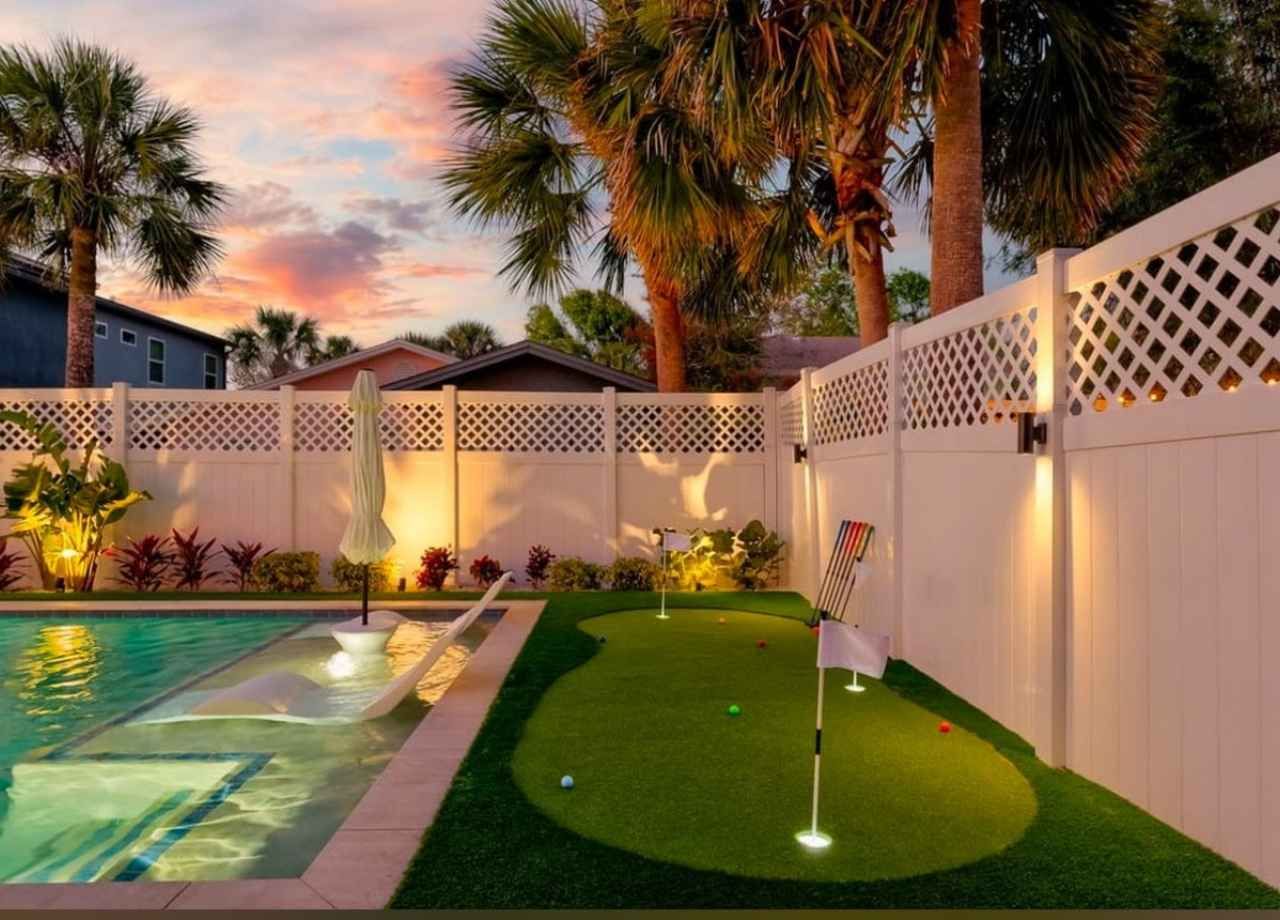
Brightness consistency also matters. One powerful fixture surrounded by lower-output lights becomes a visual magnet. Your eyes repeatedly notice the brightest source, which can reduce the apparent visibility of everything beyond it.
Several carefully positioned, lower-output sources can often provide better visual conditions than a few high-output fixtures. Dimming and separate lighting zones can improve flexibility further. Cleaning, entertaining, dining, and quiet evening use may each benefit from different lighting levels.
Use Downlighting Carefully Around Pools
Downlighting can work very well around a pool because the light source can often be positioned above normal eye level and aimed toward the ground. Suitable trees, pergolas, architectural eaves, and covered outdoor structures may provide useful mounting locations where permitted and appropriate for the equipment.
Beam placement remains important. A downlight should not simply produce a bright circle on the deck. Soft areas of overlapping illumination usually look more natural and help people understand the shape of the space without drawing attention to individual fixtures.
Tree-mounted downlights can produce attractive patterns through foliage and branches. They still need careful aiming so the beam does not travel across the pool toward a seating area or neighboring property. Trees also grow, making periodic adjustment important.
Downlights near dining areas and outdoor kitchens deserve similar care. Fixtures positioned directly over chairs may produce uncomfortable brightness or strong shadows on faces. Lighting positions should respond to furniture placement and actual use of the space.
Make Steps and Elevation Changes Visible Without Creating Hotspots
Pool decks frequently include subtle elevation changes. Steps leading to a raised spa, covered patio, outdoor kitchen, lawn, or sunken seating area need enough light to make their edges easy to recognize.
Small step lights can work well when the source is recessed and shielded. Their job is to place useful light on the tread or nearby walking surface rather than project light horizontally across the deck. Excessive output can turn a small step fixture into a distracting hotspot.
Nearby landscape lighting may sometimes provide enough illumination without adding a fixture to every step. A well-placed downlight or shielded path light can reveal several walking transitions at once, depending on the geometry of the space.
Contrast is useful here. People need to distinguish one surface from another. Carefully controlled differences in brightness can reveal edges more effectively than flooding the entire area with the same level of light.
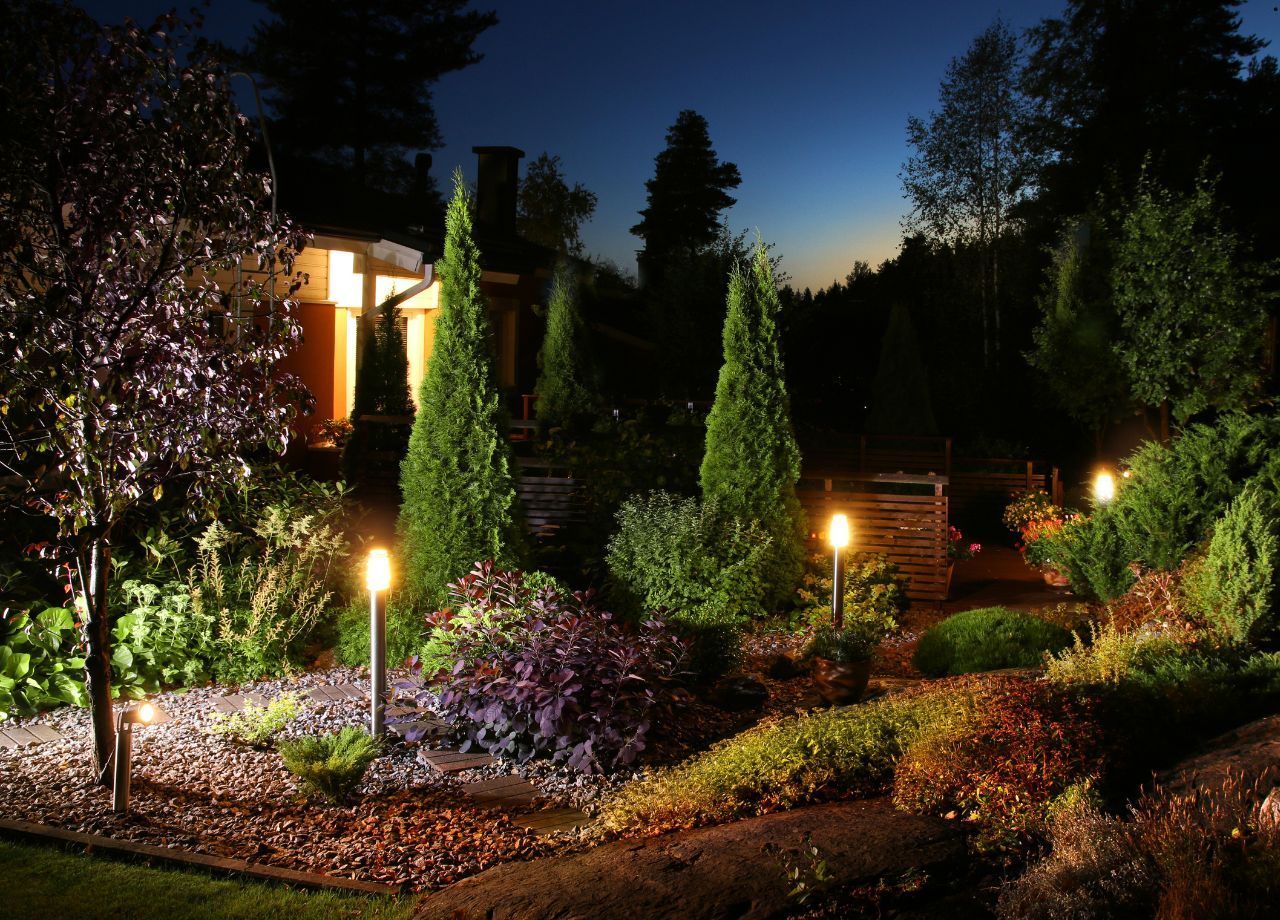
Choose Path Lights That Conceal the Light Source
Path lights are common around pool landscaping, but fixture design has a major effect on glare. Some fixtures leave the lamp or LED visible from the side. Those designs can become especially distracting near a pool because seated guests may encounter the source close to their natural line of sight.
Fixtures that direct light downward beneath a cap or shield usually provide better visual comfort. The illuminated ground should attract more attention than the LED itself. Fixture spacing should also respond to actual light distribution rather than being based only on equal distances.
Height requires attention too. Raising a path light can increase its coverage, but greater height may expose the source from farther across the pool. A well-shielded fixture with efficient optics may provide better coverage without becoming visually dominant.
Path lights also do not need to form a rigid runway around the pool. Placement can respond to landscaping, turns, grade changes, and areas where people genuinely need guidance.
Coordinate Landscape Lighting With Underwater Pool Lighting
Underwater fixtures affect how every surrounding light is perceived. A brightly illuminated pool becomes one of the strongest visual elements in the yard, changing the apparent brightness of nearby landscaping and architecture.
Landscape lighting should complement the pool rather than compete with it. Lighting every tree, wall, planter, and deck edge at high output can make the property visually busy. Selecting a few focal points and allowing other areas to remain quieter usually creates better depth.
Colored underwater lighting deserves extra attention. Blue, green, and other saturated colors can alter how nearby surfaces and plants appear. Restrained warm landscape lighting can help maintain visual separation between the water and the surrounding yard.
Reflections should also be evaluated with underwater fixtures operating. The combined lighting conditions may reveal glare that is not obvious when landscape fixtures are tested alone.
Choose Output and Optics Based on the Target
Modern LED landscape fixtures can produce substantial illumination with relatively little electrical power, so wattage is no longer a reliable indicator of how a fixture will perform visually.
Beam angle, lumen output, source depth, shielding, mounting distance, fixture orientation, and target reflectance all influence the result. A narrow beam concentrates light into a smaller area. A wider beam distributes output across more surface area. Neither is inherently better; the correct choice depends on the subject being illuminated.
A small ornamental plant beside the pool rarely needs the same output or beam angle as a mature palm or tall architectural wall. Using identical lamp specifications across an entire property can create uneven brightness and unnecessary glare.
Adjustability is also valuable. Landscaping grows, furniture moves, and outdoor spaces change. Fixtures that can be re-aimed or adjusted allow the lighting system to continue performing properly rather than sending light into new sightlines as the property matures.
Test and Fine-Tune the Lighting After Dark
Pool lighting should always be evaluated under real nighttime conditions. Plans and daytime fixture positions cannot fully predict how water, glass, pale paving, foliage, and nearby structures will interact with artificial light.
Walk around the deck once the system is operating. Sit in the lounge chairs, stand near the grill, look across the water from the spa, approach the pool from the house, and check the view through major windows and glass doors. A fixture that appears harmless from one position may be uncomfortable from another.
Reflected glare may also occur only at specific viewing angles. Moving around the space helps identify these problem areas. Small adjustments to tilt, rotation, shielding, or output can substantially improve comfort without requiring a fixture to be relocated.
Periodic adjustment is useful after installation as well. Plant growth, seasonal pruning, new furniture, and landscape changes can alter how beams travel through the property.
A Comfortable Pool Area Depends on Light Control
Good pool lighting provides visibility without making the fixtures themselves the focus. Controlled beam angles, concealed light sources, moderate output, and careful placement help reduce glare while giving the pool, landscaping, steps, and surrounding architecture a comfortable definition after dark.
Some areas can remain intentionally subdued to create depth and prevent excessive brightness. When people notice the pool and outdoor setting before they notice the lights, the lighting is doing its job well.