The Best Native North Florida Trees for Uplighting (And Which Ones to Avoid)
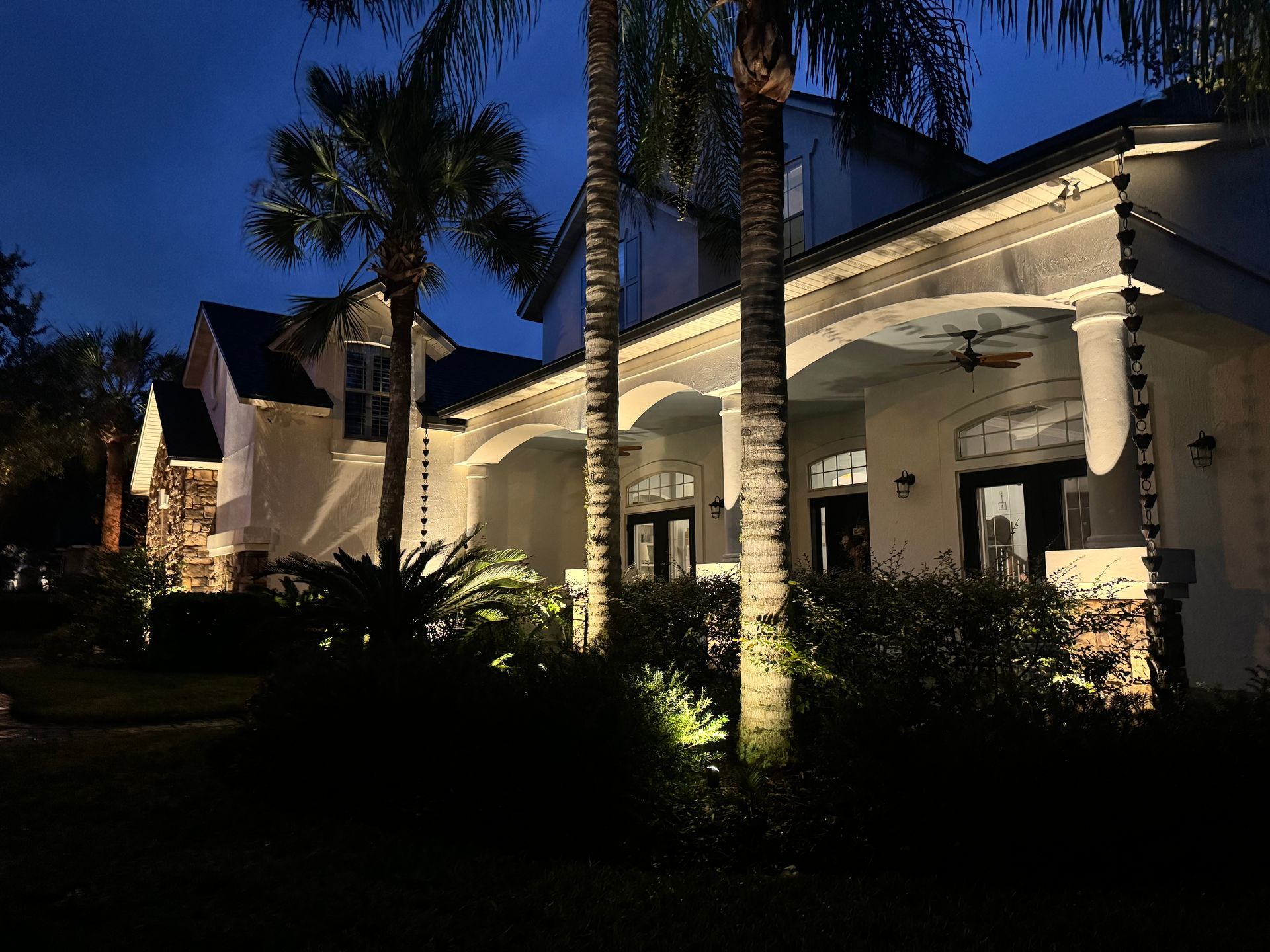
Outdoor lighting changes dramatically when the right tree becomes the focal point. A well-placed uplight can pull texture out of bark, highlight branching patterns, and create depth across the entire property after sunset. North Florida landscapes offer a huge advantage here because many native trees naturally develop forms that respond beautifully to architectural lighting.
Tree selection matters just as much as fixture placement. Some species produce layered canopies that glow with soft ambient light. Others become dense light-blocking masses that absorb illumination and leave dark voids across the yard. Certain trees thrive with low-voltage uplighting for decades, while others constantly drop debris, split limbs, or outgrow their lighting plan within a few years.
At Aloha Outdoor Lighting, properly matching fixtures to tree species is one of the biggest factors behind long-lasting landscape lighting performance in North Florida climates. Humidity, sandy soil, heavy rain, and rapid seasonal growth all affect how lighting behaves over time.
Choosing the right native tree creates a cleaner lighting design, lower maintenance costs, and a more natural nighttime appearance.
Why Native Trees Perform Better With Outdoor Lighting in North Florida
Native species adapt naturally to Florida’s climate patterns. That translates into healthier root systems, stronger branch development, and fewer disease issues compared to many imported ornamentals. Healthy trees always light better because the canopy remains balanced and structurally consistent year after year.
North Florida also experiences heavy summer storms and hurricane-season winds. Native trees tend to recover faster and maintain stronger branching structures under stress. That matters for uplighting because fixture angles rely on stable trunk growth and predictable canopy form.
Many imported trees become problematic once mature. Some develop excessive surface roots that interfere with fixture placement. Others produce extremely dense canopies that swallow light output completely. Fast-growing non-native species often create maintenance headaches from aggressive pruning cycles, falling limbs, or unstable trunks.
Native trees usually produce more organic branching patterns and bark textures, which are exactly the characteristics that create dramatic nighttime lighting effects.
Southern Live Oak Creates the Most Dramatic Uplighting Effect
Southern Live Oak remains the strongest choice for uplighting throughout North Florida. Very few trees create the same level of visual impact after dark.
The massive horizontal limb structure allows light to travel naturally through the canopy instead of stopping at dense foliage. Mature oaks create layered shadows and depth that look architectural even without nearby structures. The bark texture also responds exceptionally well to warm white lighting in the 2700K range.
Older live oaks become especially effective when multiple fixtures are used from different angles. Cross-lighting reveals the twisting branch structure while reducing harsh shadows underneath the canopy. Properties with long driveways or large front lawns benefit heavily from this effect because the illuminated canopy becomes visible from long distances.
Fixture placement matters with live oaks because surface roots eventually expand well beyond the trunk. Installations should avoid placing fixtures too close to root flares where future growth may shift or bury equipment.
Another advantage is longevity. A properly lit live oak can remain part of the same landscape lighting design for decades without major fixture relocation.
Bald Cypress Adds Vertical Drama Near Water Features
Bald Cypress works extremely well in North Florida properties that include ponds, retention areas, or low-lying wet sections.
The trunk shape creates strong vertical lighting opportunities. Mature cypress trees develop fluted bark textures that react beautifully to narrow beam uplights. Their softer foliage also creates a completely different nighttime appearance compared to broadleaf hardwoods.
Light passing through bald cypress foliage produces a feathered glow rather than a heavy shadow pattern. That softer effect works particularly well near water because reflections become calmer and more natural.
Cypress knees can complicate fixture placement over time, especially in wetter areas. Lighting layouts should leave room for future root growth and maintenance access. Brass fixtures generally hold up better near cypress installations because moisture exposure tends to remain higher year-round.
These trees also perform well with moonlighting techniques. Downlighting from elevated mounting positions inside mature cypress can create soft natural shadows across lawns, pathways, or shoreline edges.
Magnolia Trees Deliver Strong Texture and Year-Round Coverage
Southern Magnolia produces one of the richest foliage appearances under landscape lighting.
The glossy leaves reflect warm light exceptionally well, creating a polished nighttime appearance without looking artificial. Magnolias also maintain dense evergreen coverage throughout the year, which helps preserve consistent lighting results across every season.
Trunk lighting becomes especially effective on older specimens because mature magnolias develop deeply textured bark with strong visual contrast. Multi-trunk varieties can become standout focal points when illuminated from staggered angles.
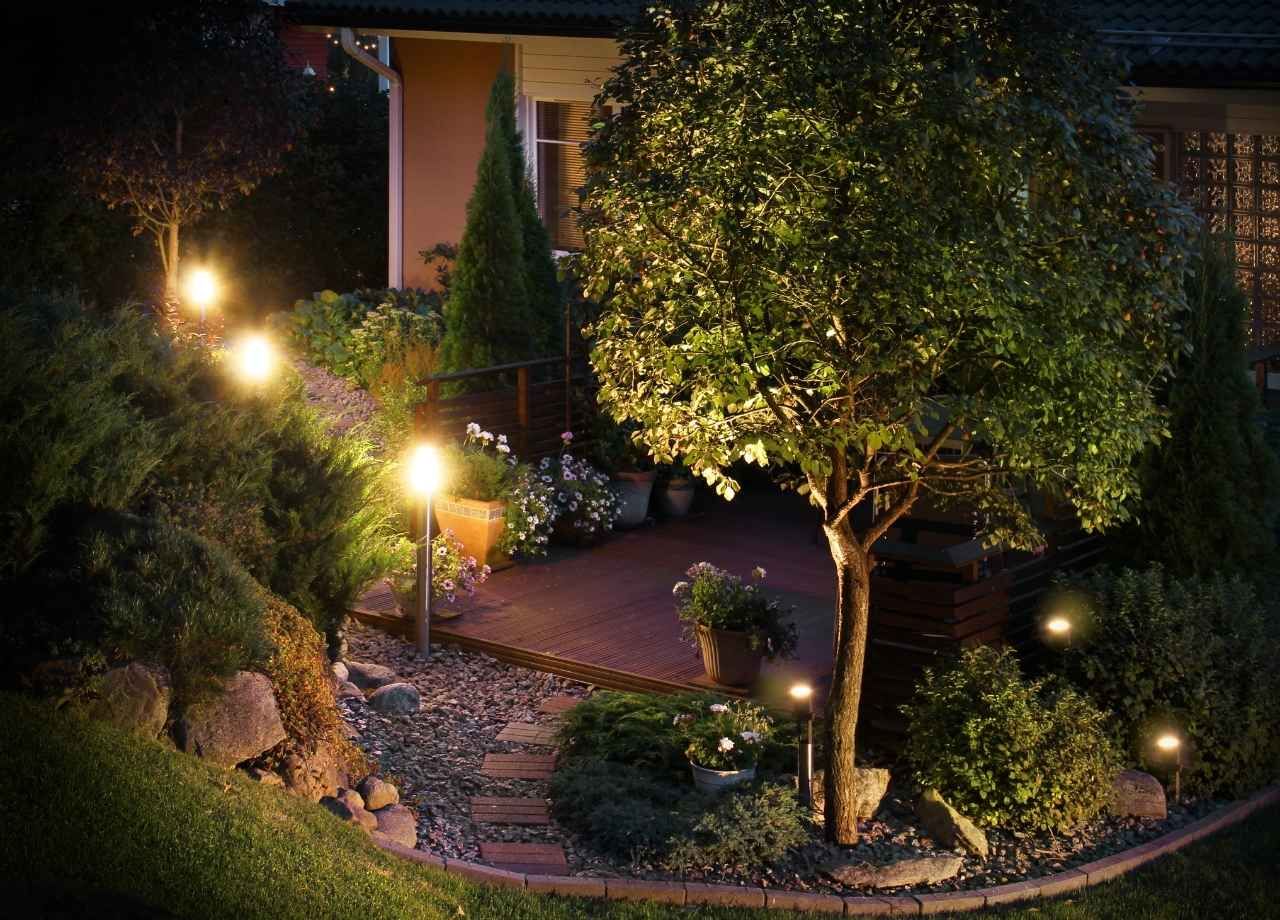
Placement becomes critical with magnolias because the canopy density can overpower weak fixtures. Lower-output lights often disappear entirely beneath mature foliage. Professional-grade fixtures with proper beam spread are usually necessary to reveal canopy depth effectively.
Magnolias also benefit from selective pruning to improve light penetration. Without occasional thinning, interior branching can become too dense and create uneven illumination patterns.
River Birch Produces Excellent Movement and Layered Shadows
River Birch offers a completely different uplighting effect compared to heavier Southern hardwoods.
The peeling bark immediately becomes the visual centerpiece after dark. Warm uplighting emphasizes the cream, cinnamon, and gray bark coloration while creating high contrast against darker backgrounds.
Multi-trunk river birch clusters become especially attractive near entryways or garden transitions.
Wind movement also plays a major role here. The smaller leaves create subtle motion under lighting conditions, which adds energy to nighttime landscapes without appearing harsh or overly dramatic.
River birch works best with softer beam spreads rather than extremely narrow spotlights. Wide-angle fixtures allow bark texture and canopy movement to blend together more naturally.
These trees prefer consistent moisture, so they tend to perform better in areas where irrigation remains reliable. Stressed birches thin out quickly in hotter conditions, which weakens their lighting effect substantially.
Red Maple Creates Outstanding Fall Lighting Color
Red Maple provides one of the strongest seasonal lighting displays in North Florida landscapes.
Most uplighting conversations focus only on nighttime structure, but seasonal foliage color changes can dramatically affect how a property looks after sunset. Red maples produce vivid orange and red tones that become amplified under warm landscape lighting during fall months.
Even outside autumn, their branching structure responds nicely to moderate uplighting. Younger specimens produce clean symmetrical canopies that work well near residential architecture.
The challenge with red maples comes from growth rate and mature size. Trees planted too close to homes or hardscapes eventually create spacing problems for both roots and lighting coverage. Fixtures may require relocation over time as root systems expand outward.
Another consideration involves leaf drop. Heavy seasonal shedding increases fixture maintenance requirements because debris can block lenses and reduce light output.
Longleaf Pine Creates a Natural Coastal Lighting Look
Longleaf Pine delivers a distinctly North Florida appearance that works beautifully in coastal and rural properties.
The tall trunk structure allows uplighting to emphasize height without overwhelming the surrounding landscape. Mature longleaf pines create a clean vertical beam effect that feels subtle and natural at night.
Their open canopy structure also allows moonlighting techniques to perform extremely well. Soft uplighting or downlighting through pine needles creates moving shadow patterns that resemble natural moonlight instead of artificial illumination.
Pines generally require restraint with brightness levels. Excessively powerful fixtures can make trunks appear washed out or create glare visible from neighboring properties. Lower-intensity warm lighting tends to produce a much cleaner result.
Needle drop also affects maintenance planning. Fixtures should remain accessible for periodic cleaning to prevent buildup around lenses and housing components.
Trees That Usually Underperform With Uplighting
Not every native or Florida-adapted tree creates a good lighting result. Some species become frustrating from both a design and maintenance standpoint.
Water Oak often develops weak branch structures and inconsistent canopy density. Uplighting may initially look attractive on younger specimens, but long-term storm damage and uneven growth usually create poor symmetry. Falling limbs also increase fixture damage risk during severe weather.
Laurel Oak presents similar issues. These trees grow quickly but tend to decline earlier than live oaks. Rapid canopy changes make lighting layouts difficult to maintain over time.
Sweetgum creates maintenance headaches because of constant seed pod drop. Fixtures installed beneath sweetgums frequently require cleaning, repositioning, or debris removal. Surface roots also become problematic as trees mature.
Dense ornamental evergreens can also perform poorly. Some holly varieties and tightly packed wax myrtles absorb most uplight instead of reflecting it. The result becomes a dark green mass with very little visible texture or depth after sunset.
Trees with low branching habits may also limit visibility from the street. When canopies begin too close to ground level, much of the light remains trapped beneath the foliage rather than contributing to overall curb appeal.
Matching Fixture Techniques to Tree Type
Lighting success depends heavily on pairing fixture style with tree characteristics.
Large canopy trees usually benefit from multiple lower-wattage fixtures instead of a single high-output spotlight. This creates more balanced illumination and reduces harsh trunk hotspots.
Textured bark species respond best to narrow beam angles aimed vertically along the trunk. Trees with softer foliage often look better with wider flood patterns that illuminate canopy layers evenly.
Color temperature matters more than many homeowners realize. Warm white lighting around 2700K generally complements native North Florida trees best. Cooler temperatures can make bark appear gray or lifeless, especially on oaks and magnolias.
Beam shielding also becomes important in residential neighborhoods. Proper glare control keeps lighting focused on the tree rather than spilling into windows or roadways.
Tree growth should always factor into installation planning. Fixtures placed perfectly today may become buried, shaded, or root-bound within several years if future expansion is ignored.
Native Trees Create Better Long-Term Lighting Results
The strongest outdoor lighting projects are built around mature landscape structure, not temporary visual trends. Native North Florida trees naturally provide the branching, bark texture, and canopy forms that uplighting depends on.
Live oaks remain the gold standard for dramatic nighttime landscapes. Bald cypress adds softness near water features. Magnolias deliver evergreen texture year-round, while river birch and red maples introduce movement and seasonal contrast.
Avoiding weak-structured or debris-heavy species prevents many long-term lighting problems before they begin. Proper tree selection reduces fixture maintenance, improves nighttime curb appeal, and helps lighting systems age more gracefully across Florida’s demanding climate.
Well-designed uplighting should feel like the tree was always meant to glow after sunset. Native species make that effect far easier to achieve.