Outdoor Soffit Light Placement
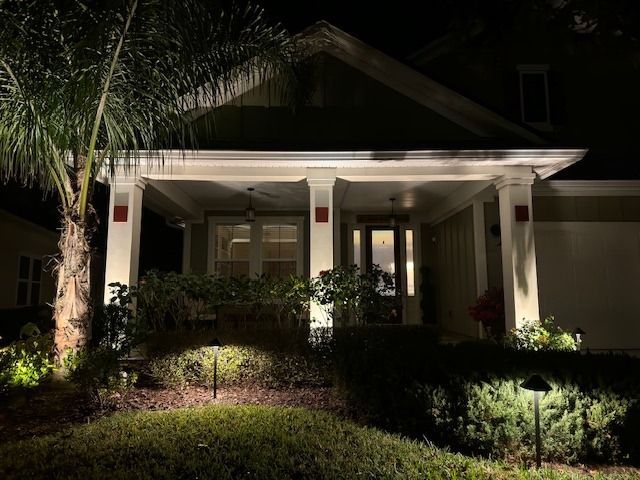
Outdoor soffit lighting sits at the intersection of architecture, function, and visual comfort. Placement choices affect how a home looks from the street, how safely people move around it after dark, and how balanced the lighting feels once the sun goes down. Poor placement leads to harsh glare, dark pockets, or fixtures that draw attention for the wrong reasons. Thoughtful placement turns soffit lighting into an integrated part of the structure rather than an afterthought.
Early planning always delivers the best results. A custom lighting designer can account for rooflines, ceiling heights, wall textures, and viewing angles before a single hole is cut. Aloha Outdoor Lighting supports homeowners across Northeast Florida with layout planning and precision installation when professional input makes sense, especially on larger or architecturally complex homes.
Understanding What Soffit Lighting Is Meant to Do
Outdoor soffit lights mount into the underside of roof overhangs or eaves. Their primary job involves casting controlled, downward light along walls, walkways, and entry points. Secondary benefits include accenting architectural lines and improving nighttime visibility without exposing fixtures directly to view.
Placement decisions should always start with purpose. Lighting meant for safe passage around the home requires a different spacing and beam angle than lighting intended to wash a stone façade or highlight trim details. Treating soffit lighting as a general flood of brightness usually creates glare and uneven illumination. A more precise approach produces better results with fewer fixtures.
Evaluating Rooflines, Eaves, and Ceiling Height
Soffit depth and height set the foundation for every placement decision. Shallow eaves restrict fixture size and beam spread, while deep overhangs allow more flexibility but demand careful aiming. Ceiling height also influences how tightly fixtures should be spaced.
Homes with eight to nine foot soffits generally benefit from closer spacing to maintain even light levels along the ground plane. Taller soffits can space fixtures farther apart, though beam angle becomes more important to avoid scalloping on walls. Irregular rooflines require special attention to transitions where light coverage can easily break down.
Architectural drawings rarely tell the whole story. Standing on site and visually tracing the roof edge often reveals shadows, recesses, or obstructions that affect placement.
Spacing Principles That Actually Work Outdoors
Rule of thumb spacing charts only offer rough guidance. Outdoor environments vary too much for fixed numbers to apply universally. Practical spacing depends on mounting height, beam angle, lumen output, and surface reflectivity.
For general pathway illumination, many installations land between four and six feet apart. Narrow beam fixtures need tighter spacing to prevent dark gaps, while wide beam optics allow greater separation. Light colored walls reflect more light back into the space, which can justify wider spacing compared to darker brick or siding.
Consistent spacing matters more than absolute distance. Uneven gaps draw the eye and break the visual rhythm of the façade. Measuring carefully and keeping spacing symmetrical around doors and windows helps the lighting feel intentional.
Aligning Fixtures With Architectural Features
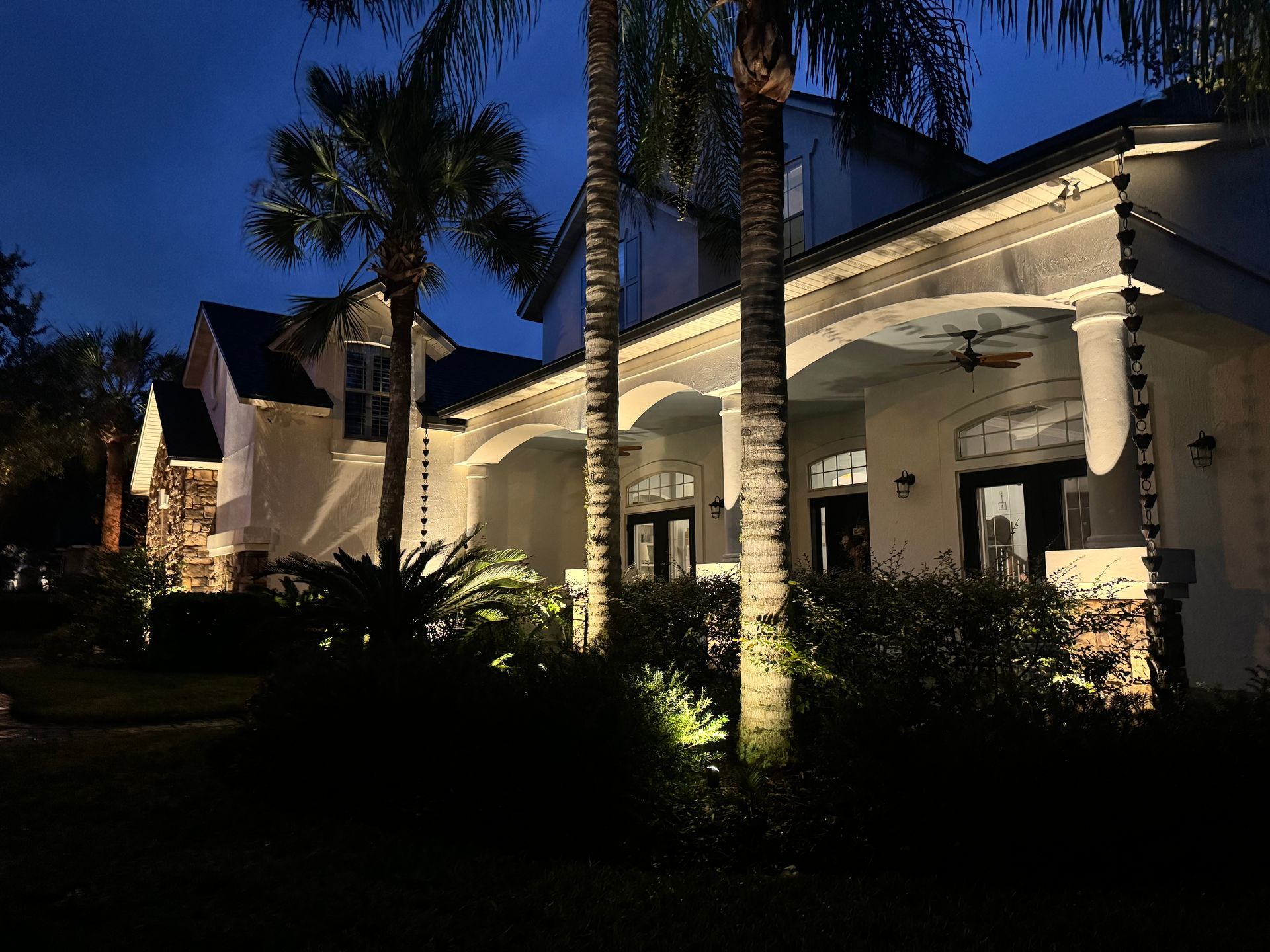
Strong soffit lighting layouts respect the home’s geometry. Fixtures centered over doors, windows, and columns create visual order and prevent awkward shadows. Random placement leads to hot spots that compete with architectural details rather than enhancing them.
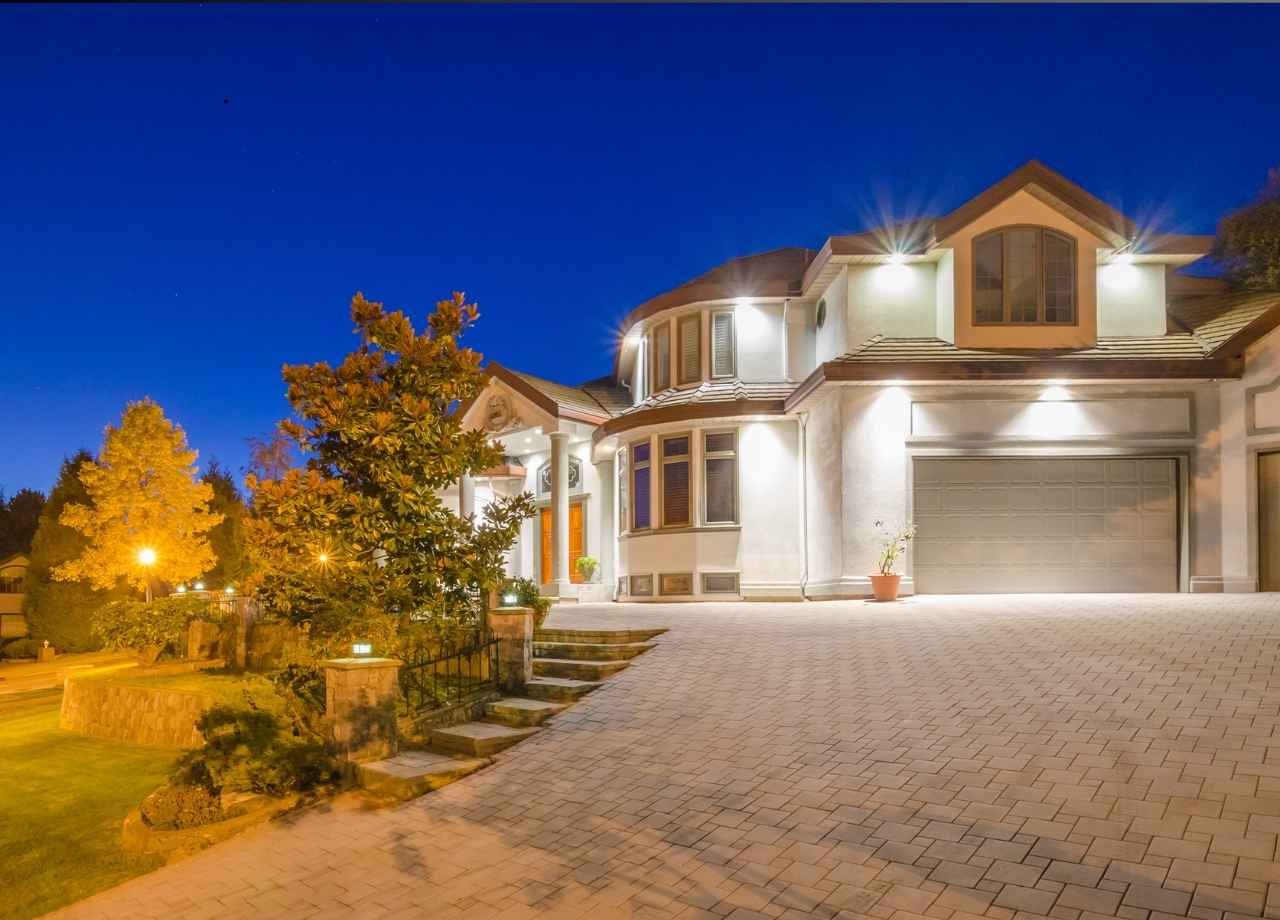
Windows deserve special attention. Lights placed too close to glass can cause interior glare and reflections. Shifting fixtures slightly away from window edges softens the effect while still illuminating the surrounding wall. Entryways benefit from layered light, with soffit fixtures supporting dedicated entry lights rather than trying to replace them.
Corners often get overlooked. A fixture placed near an exterior corner helps wrap light around the structure, reducing harsh transitions from light to dark.
Choosing Beam Angles Based on Placement Goals
Beam angle selection often matters more than fixture wattage. Narrow beams concentrate light and work well for tall mounting heights or accenting specific areas. Wide beams spread light evenly across walls and walkways when mounted lower.
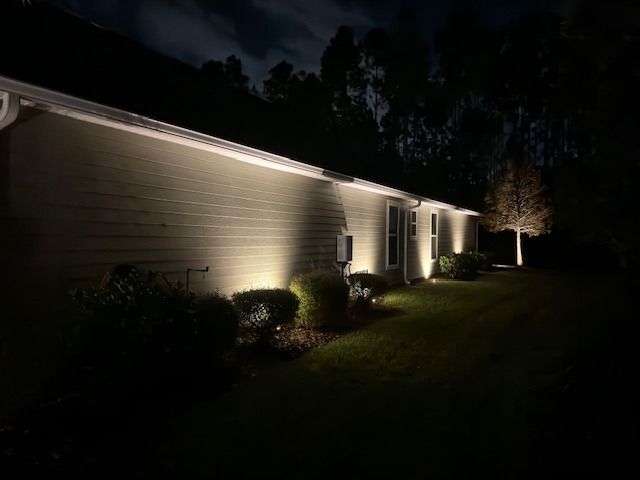
Wall washing applications benefit from wider beam angles aimed slightly away from the wall to avoid streaking. Walkway lighting typically works best with medium beam optics that balance coverage and control. Driveway edges can use narrower beams to prevent light spill onto neighboring properties.
Matching beam angle to placement reduces the temptation to overlight the space, which improves comfort and efficiency.
Managing Glare and Visual Comfort
Glare ranks among the most common soffit lighting mistakes. Fixtures that expose the light source directly to the eye cause discomfort and draw attention to the hardware rather than the architecture. Recessed fixtures with proper shielding help keep the light where it belongs.
Fixture placement relative to viewing angles matters. Lights installed too close to the edge of the soffit become visible from across the yard or street. Pulling fixtures back slightly improves cutoff and softens the appearance.
Color temperature also affects comfort. Warm white tones in the 2700K to 3000K range feel more natural outdoors and reduce harsh contrast against dark surroundings.
Entryways and High Traffic Areas
Entry points deserve brighter and more deliberate lighting than secondary areas. Soffit fixtures around front doors should support facial recognition, key visibility, and safe footing. Positioning lights slightly forward of the door helps illuminate visitors without casting shadows from overhangs.
Garage doors and service entries benefit from even coverage that avoids blinding drivers or pedestrians. Placing fixtures along the garage soffit rather than directly above door openings spreads light more evenly across the apron.
Walkways leading from driveways to entrances should receive consistent light without dark breaks. Spacing adjustments near steps or grade changes improve safety and visual clarity.
Coordinating Soffit Lights With Other Exterior Fixtures
Soffit lighting rarely works alone. Path lights, wall sconces, and landscape accents all contribute to the nighttime scene. Placement should complement these elements rather than compete with them.
Overlapping light sources can create excessive brightness in certain areas. Gaps between systems leave shadows that undermine safety. Coordinating beam spreads and light levels across fixture types maintains balance.
Control systems help manage this interaction. Separate zones allow soffit lights to run at lower levels while other fixtures handle task lighting. Dimming capability adds flexibility for different times of night.
Electrical Planning and Structural Considerations
Soffit lighting placement must respect framing, ventilation, and insulation. Cutting blindly into soffits risks damaging vents or compromising airflow. Pre-install inspections identify safe mounting zones and wiring paths.
Retrofit projects face additional challenges. Existing soffits may lack sufficient depth for certain fixtures. Surface mounted alternatives or low-profile recessed designs can solve these issues when planned correctly.
Moisture resistance also matters. Outdoor-rated fixtures with proper sealing protect wiring and prevent long-term issues caused by humidity or insects.
Long Term Maintenance and Accessibility
Placement decisions influence maintenance long after installation. Fixtures mounted extremely high or tucked tightly into corners complicate bulb replacement or servicing. LED technology reduces maintenance frequency, yet accessibility still matters over the life of the system.
Uniform fixture models simplify future replacements and upgrades. Mixing sizes or styles within the same soffit often looks inconsistent and complicates maintenance.
Planning for future expansion also pays off. Leaving space for additional fixtures or wiring allows the system to grow as needs change.
Regional Factors and Environmental Conditions
Climate plays a role in soffit lighting placement. Coastal environments demand corrosion resistant materials and careful sealing. Areas with heavy rainfall benefit from fixtures positioned to avoid direct water exposure from roof runoff.
Local light pollution considerations influence placement and aiming. Keeping light directed downward and shielded protects night skies and neighboring properties.
Tree growth also affects long term performance. Lights placed near eaves that overhang landscaping may require adjustment as foliage matures.
Why Placement Matters More Than Fixture Count
Adding more fixtures rarely fixes a poor layout. Strategic placement achieves better coverage, comfort, and appearance with fewer lights. Thoughtful design reduces energy use and improves reliability.
Every home presents a unique combination of architecture, usage patterns, and surroundings. Treating soffit lighting as a design element rather than a checklist item produces results that feel intentional and refined.
Outdoor soffit light placement rewards careful observation and technical understanding. Precision at the planning stage prevents years of frustration and delivers lighting that works quietly in the background, supporting the home rather than competing with it.