
Outdoor lighting can make a property easier to use after sunset while adding comfort, visibility, and character to the exterior. A well-planned low voltage system can illuminate walkways, architectural details, landscaping, patios, entrances, and gathering areas without overwhelming the property with excessive brightness. Property owners searching for Low Voltage Landscape Lighting Installation need a system designed around the layout of the property rather than a collection of fixtures placed without a clear purpose.
Aloha Outdoor Lighting provides professionally planned lighting solutions for homes and properties throughout Jacksonville. Our approach focuses on fixture placement, dependable installation, energy-efficient operation, and lighting that complements the property during nighttime hours.
Why Choose Low Voltage Landscape Lighting?
Low voltage landscape lighting typically operates at 12 volts through a transformer that converts standard household power to a lower voltage. This setup makes it a practical choice for outdoor environments and provides flexibility when positioning fixtures throughout a landscape.
LED fixtures can also use less electricity than many traditional outdoor lighting options. Long lamp life and lower energy consumption can help reduce routine maintenance while keeping outdoor areas properly illuminated.
A professionally designed Low Voltage Landscape Lighting Installation can serve several purposes at once. Path lights can improve visibility around walkways and steps, uplights can draw attention to trees or architectural features, and carefully positioned fixtures can make patios and outdoor living areas more comfortable after dark.
The Landscape Lighting Design Process
Good installation begins with planning. We start by reviewing the property and identifying areas where lighting can provide practical or visual value. Existing landscaping, architecture, pathways, entrances, outdoor living areas, trees, walls, and other property features can influence fixture selection and placement.
Lighting should also be considered from several viewing points. Fixtures that look appropriate from the driveway may create unwanted glare when viewed from a patio or window. Careful planning helps balance brightness, direction, spacing, and shadows.
A lighting plan can then be created around the property's needs. Fixture types, beam spreads, color temperatures, transformer requirements, cable routes, and control options are considered before installation begins. This planning helps create a cleaner finished appearance and supports reliable system performance.
Professional Low Voltage Lighting Installation
Proper installation involves much more than placing fixtures in the ground. Cable routes need to be planned carefully, electrical loads need to be considered, connections need protection from outdoor conditions, and fixtures need stable placement.
During a Low Voltage Landscape Lighting Installation, cables are routed with attention to landscaping and commonly used areas. Fixtures are positioned to produce the intended effect without creating unnecessary glare. Connections are made for dependable outdoor use, and the transformer is sized according to the system requirements.
Once installation is complete, each fixture should be tested and adjusted after dark. Nighttime adjustments are important because beam direction and brightness can look very different after sunset. Small changes to fixture angles can improve the appearance of trees, walls, pathways, and architectural details.
Lighting Options for Jacksonville Properties
Different areas of a property require different lighting techniques. A single fixture style rarely provides the best result across an entire landscape.
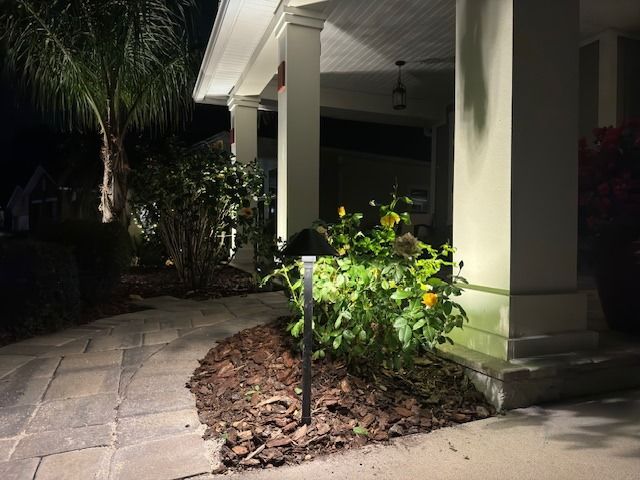
Common options include:
- Path lights for sidewalks, garden paths, and transitions between outdoor areas
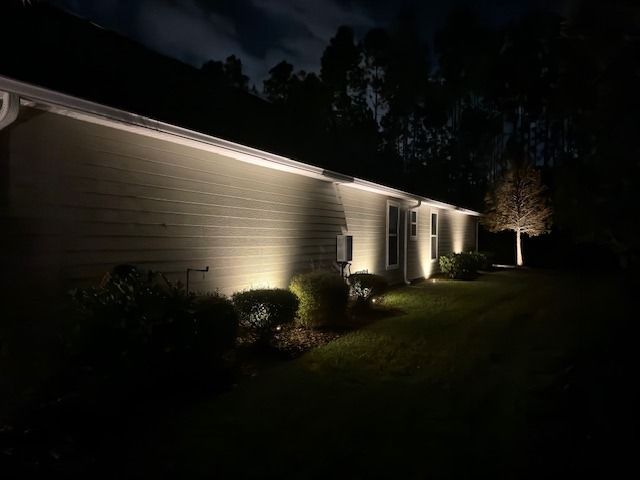
- Uplights for trees, columns, textured walls, and architectural details
- Downlights for softer illumination from trees or elevated mounting points
- Step and hardscape lights for stairs, retaining walls, seating areas, and outdoor structures
- Accent lights for landscape features, palms, sculptures, and focal points
- Patio and outdoor living lighting for spaces used for dining, relaxing, or entertaining
Selecting fixtures based on their purpose helps keep the system organized and prevents the property from appearing overlit.
Designed for Local Outdoor Conditions
Jacksonville landscapes can include mature trees, palms, dense planting beds, large lawns, pools, patios, and coastal-style architecture. Local weather and growing conditions also make fixture quality and installation methods important considerations.
A Low Voltage Landscape Lighting Installation should account for rain, moisture, landscape maintenance, plant growth, and regular outdoor use. Fixture locations should provide the desired illumination without unnecessarily interfering with mowing, trimming, irrigation, or other property maintenance.
Plant growth deserves attention as well. Shrubs and trees can eventually block fixtures or change the way light travels through the landscape. Thoughtful positioning can make future adjustments easier as the property changes.
Energy Efficiency and Lighting Controls
LED and energy-efficient upgrades provides strong illumination with relatively low energy consumption. A properly sized system can illuminate several areas of a property without requiring the energy demands associated with older lighting technologies.
Controls can make operation easier. Timers, photocells, and compatible smart controls can automatically manage when the lighting turns on and off. These features help homeowners avoid operating the system unnecessarily during daylight hours.
Low Voltage Landscape Lighting Installation can also be planned with future additions in mind. Where appropriate, transformer capacity and cable planning can leave room for additional fixtures if landscaping, patios, walkways, or other outdoor areas are added later.
Why Work With Aloha Outdoor Lighting?
Professional landscape lighting requires an understanding of design as well as installation. A fixture may be technically installed correctly yet still produce glare, uneven illumination, or an unwanted visual effect if its placement is poorly planned.
Aloha Outdoor Lighting combines design planning with careful installation to create systems suited to each property. We consider how the property looks during the day and how individual features should appear after sunset. Fixture placement is based on function and visual balance rather than simply adding as many lights as possible.
Quality equipment is another important part of dependable outdoor lighting. Durable fixtures, weather-resistant connections, properly sized transformers, and careful cable installation can contribute to longer system life and fewer avoidable service issues.
Ongoing Adjustments and Maintenance
Landscape lighting systems can benefit from periodic attention. Plants grow, landscaping changes, fixtures can shift, and lenses may collect dirt or debris. Routine checks can help maintain the original lighting effect.
Maintenance may include cleaning fixtures, adjusting angles, checking connections, reviewing timers, repositioning lights around plant growth, and replacing damaged components when necessary. Our goal is to help the system continue performing as intended rather than treating installation as the end of the project.
Plan Your Landscape Lighting Project
Choosing Low Voltage Landscape Lighting Installation gives property owners a practical way to improve nighttime visibility and highlight the features that make an outdoor space distinctive. Careful design, suitable fixtures, professional installation, and efficient LED technology can create lighting that feels comfortable and purposeful.
Aloha Outdoor Lighting serves Jacksonville property owners who want outdoor lighting planned around their home, landscape, and everyday use. From pathways and entrances to trees, patios, gardens, and architectural details, us providing careful planning and installation helps create an exterior lighting system built for regular use and easier upkeep.
